Medical care
Disease-specific treatment and specialist care to control harmful immune activity, protect tissue, and maintain remission.
Ambitious Autoimmune Girlies
Treat the disease.
Support the person.
Medical treatment, whole-person support, and a clearer picture of your health over time all belong in autoimmune care. You deserve help bringing them together in a way that works for you.
Your goals guide the process. Whether you want help getting a medication delivered or exploring additional support with your care team, you decide where we begin.
Autoimmune disease can develop and change over time. Thinking in terms of different states helps us understand why someone’s needs can change, too.
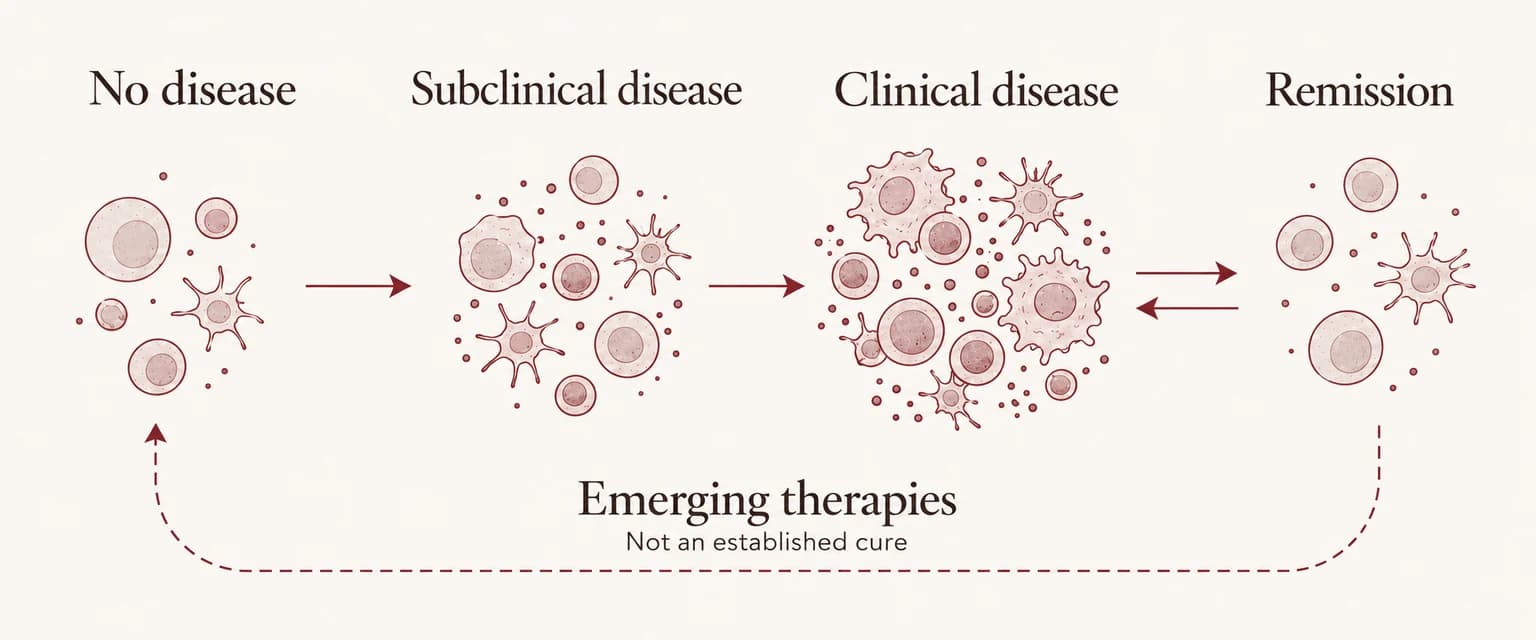
No detectable disease. Susceptibility can still vary from person to person.
Early immune changes or symptoms may appear before a clear diagnosis. Some people progress; others do not.
Disease is clinically apparent. Active inflammation can affect daily life and, in some conditions, damage tissue.
Disease activity is minimal or absent by disease-specific criteria, often with treatment. Flares can still occur.
Emerging immune therapies, including CAR T-cell approaches, are being studied for deeper, lasting disease control. Early research in selected severe autoimmune conditions is encouraging, but does not establish a cure across autoimmune diseases.
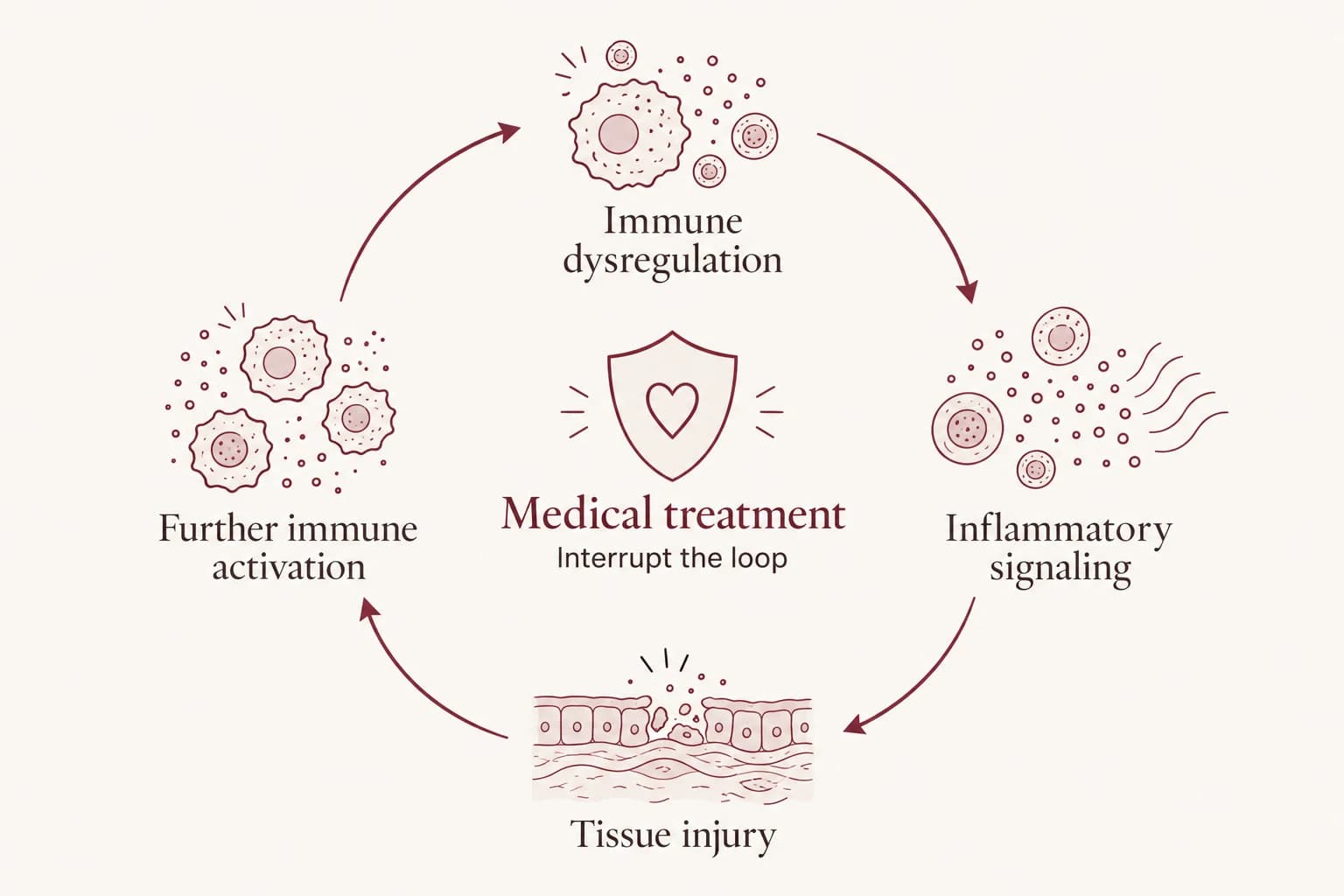
In some autoimmune conditions, immune activity and tissue injury can reinforce one another. Once that cycle is established, medical treatment can be essential to interrupt it and protect against further damage.
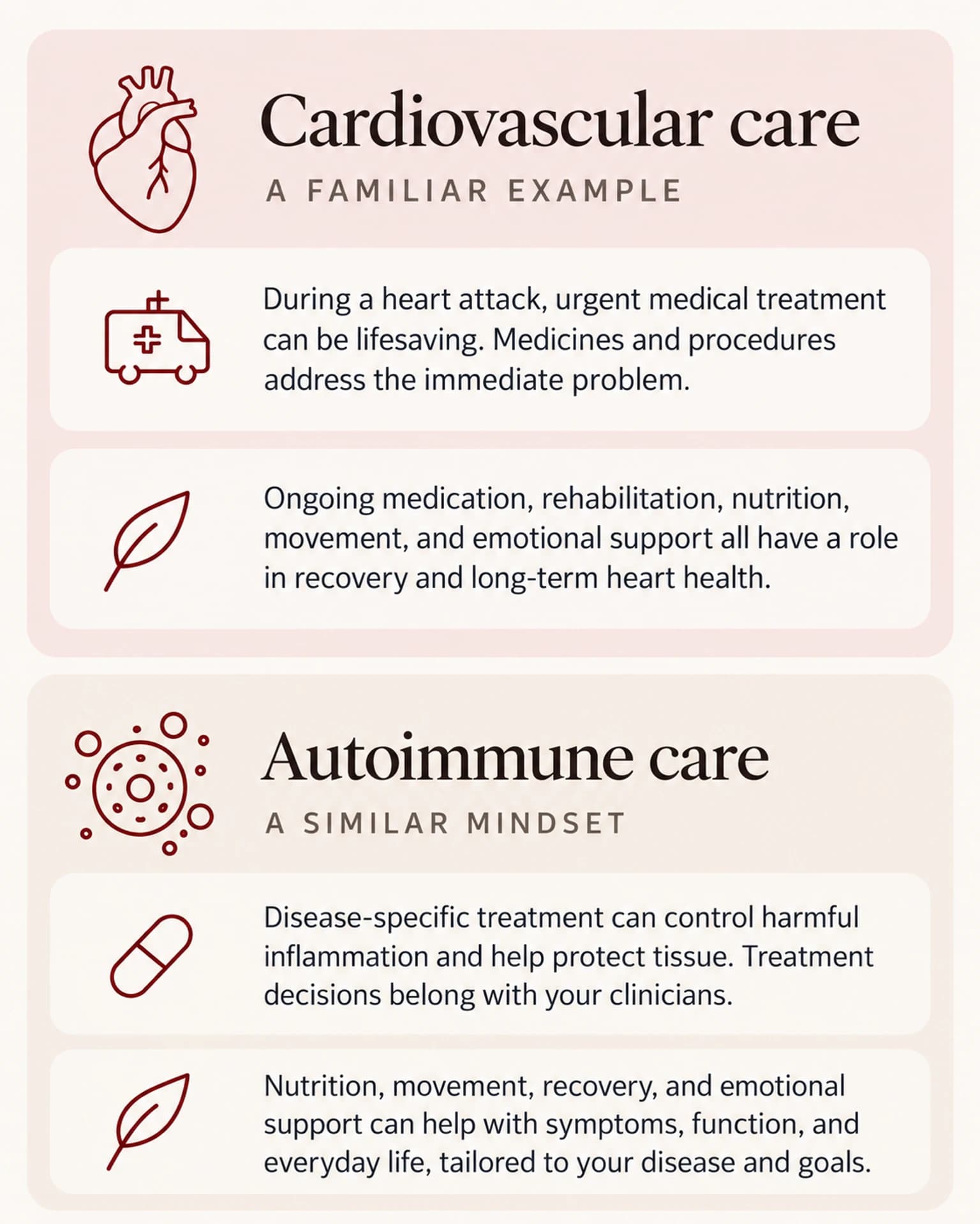
Think about care after a heart attack. Immediate medical treatment matters. So do appropriate ongoing medication, rehabilitation, nutrition, movement, and emotional support. Recovery brings those pieces together.
Autoimmune care deserves the same breadth. Disease-specific treatment can control harmful inflammation, while additional support can help with function, symptoms, coping, and everyday life. Support should be tailored to each individual's disease, lifestyle, and goals.
Our philosophy draws on evidence-based approaches to comprehensive autoimmune care, including the American College of Rheumatology's 2022 guideline for rheumatoid arthritis (opens in a new tab) for integrating medical treatment with exercise, rehabilitation, nutrition, and psychological support.
We believe that excellent care goes beyond treating disease activity.
These are areas of support to draw on as you need them.
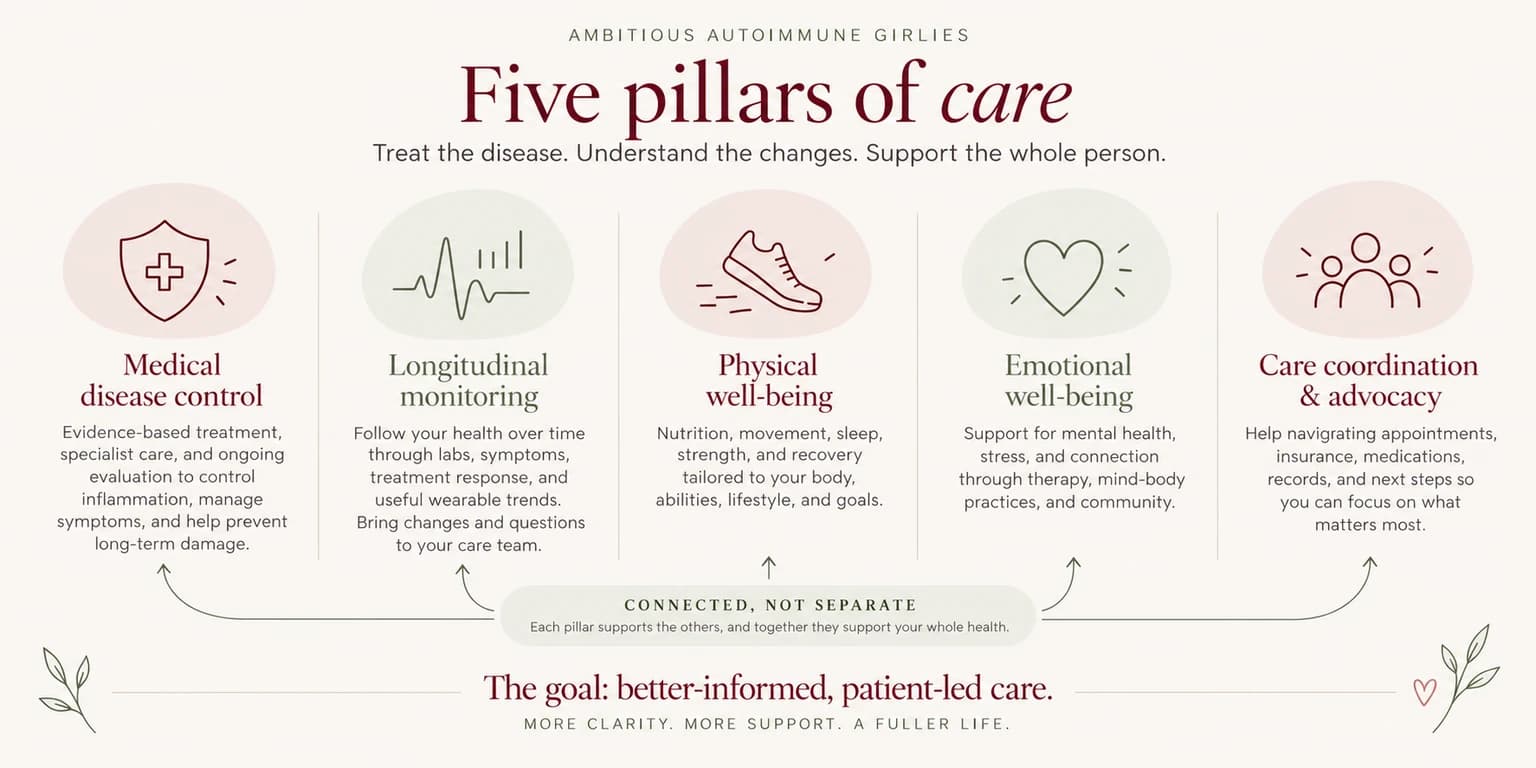
Disease-specific treatment and specialist care to control harmful immune activity, protect tissue, and maintain remission.
Following symptoms, clinical results, treatment response, and, when useful, wearable trends over time. Making sure changes and outstanding results reach the right clinician.
Nutrition, movement, strength, sleep, rehabilitation, and recovery adapted to your condition, energy, preferences, and mobility. Support should fit your life and capacity.
Support for mental health, grief, stress, connection, and feeling more at home in your body. Therapy and mind–body practices are options to explore on your terms.
Connecting the moving pieces: records, appointments, prescriptions, referrals, resources, and follow-through. Helping your care plan become manageable in everyday life.
Care can learn and adapt as your health and priorities change. Information becomes useful when it leads to a shared understanding and an appropriate next step.
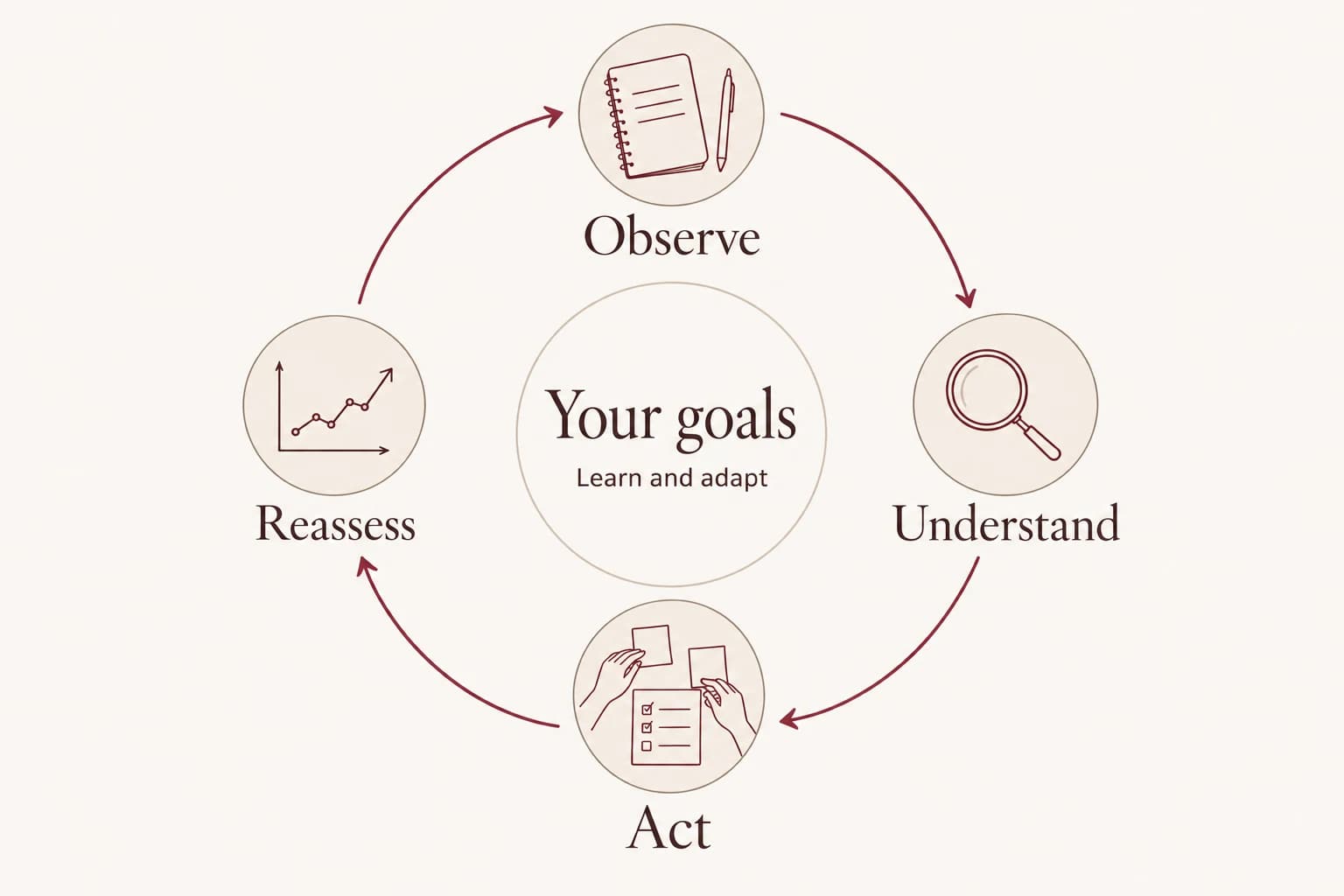
Gather the information that matters: symptoms, medical results, side effects, daily function, and optional wearable trends.
Put changes in context. Organize questions and bring them to clinicians who can interpret what they mean for your health.
Carry out the next steps you agree on with your care team, from treatment and referrals to practical support and daily routines.
Review what helped, what remains unresolved, and how your priorities have changed. Then observe again and adapt together.
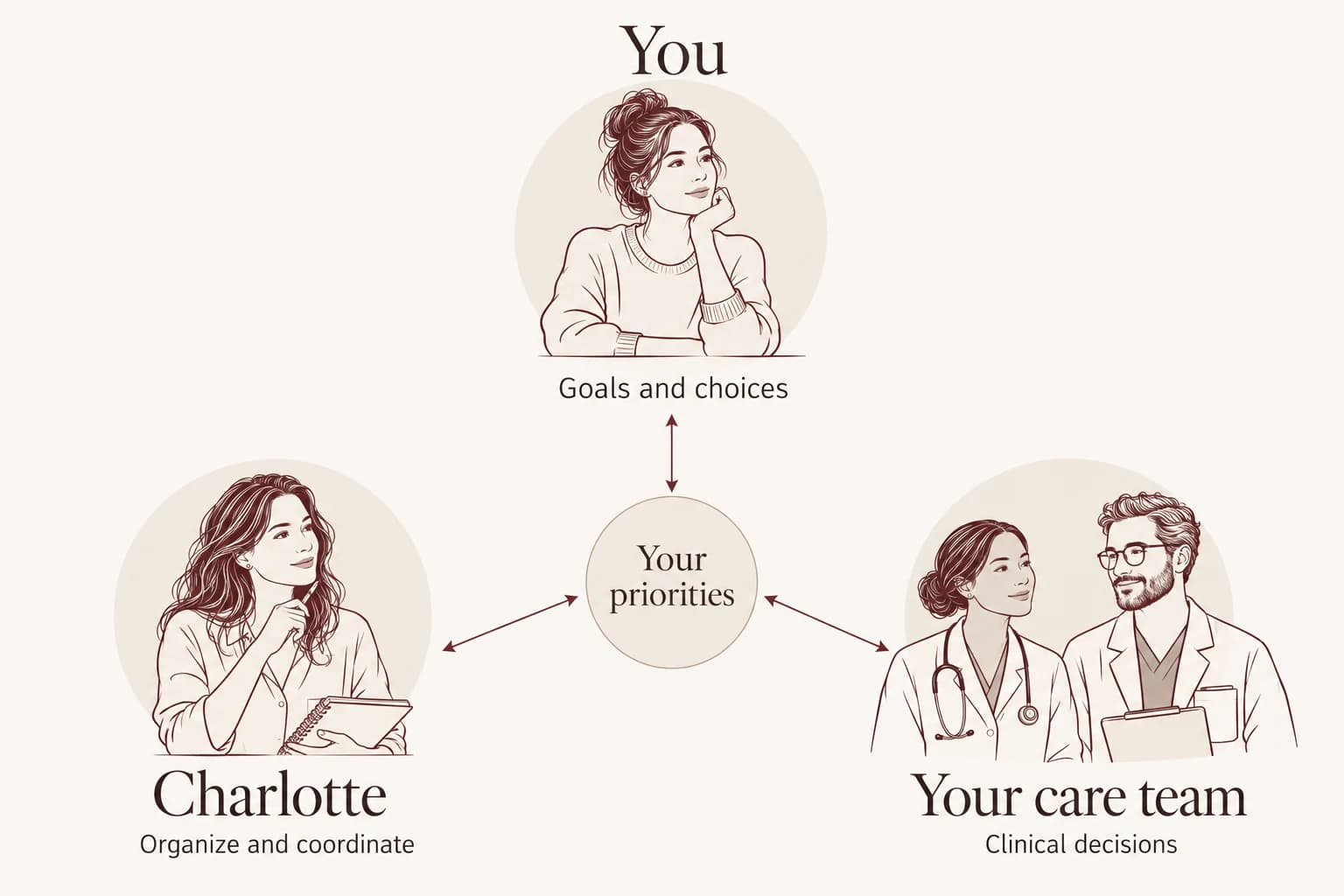
We start with what you want help with. I can help gather information, find resources, prepare questions, coordinate care, and follow through on the decisions you make with your clinicians.
Clinical partners here means your existing care team and qualified professionals you choose to involve. Your clinicians diagnose, interpret medical findings, and recommend treatment. My role is to help you navigate that process and keep your priorities in view.
| Your goal | How I can help | Your clinical partner’s role |
|---|---|---|
| Keep treatment on track | Organize treatment schedules, coordinate pharmacy or infusion logistics, and follow up on access barriers. | Your prescriber and pharmacist choose, prescribe, and review treatment and medication safety. |
| Make sense of changes over time | Organize symptoms and results, track outstanding tests, and prepare a focused summary and questions for appointments. | Your treating clinician orders appropriate tests, interprets findings, and assesses disease activity. |
| Find nutrition support that fits | Help you find a registered dietitian, gather relevant records, and follow through on a plan you choose with them. | A dietitian and your treating clinician assess nutritional needs, deficiencies, and disease-specific considerations. |
| Move, rest, and recover | Find relevant rehabilitation resources and help fit appointments and agreed routines around your energy and commitments. | A physical or occupational therapist and your clinician assess limitations and guide appropriate activity and rehabilitation. |
| Support emotional well-being | Help you explore therapy, peer support, and optional mind–body resources that match your preferences and access needs. | A qualified mental-health professional provides assessment and treatment; your care team helps address medical contributors. |
| Connect the pieces of care | Coordinate records, referrals, appointments, and follow-up so unresolved concerns and your priorities stay visible. | Your clinicians communicate clinical recommendations and retain responsibility for diagnosis and treatment decisions. |
You can choose one area of support, explore several, or decline anything that does not fit. A good care plan should help you live your life and leave room for it.
Work with Charlotte